

OSHA’s Hazard Communication Standard (HazCom, 29 CFR 1910.1200) gives workers the right to know about the chemicals they work with. It does this through four tools: a written hazard communication program, GHS-style labels with pictograms, 16-section Safety Data Sheets (SDS), and worker training. This guide explains every GHS pictogram, how to read a label and an SDS, what changed in the 2024 update, and who needs HazCom training.
What is HazCom?
HazCom is the OSHA rule that requires chemical manufacturers and importers to evaluate the hazards of the chemicals they make or import, and to pass that information down the supply chain on labels and Safety Data Sheets. Employers must then make sure that information reaches their workers.
Every employer with hazardous chemicals in the workplace must have:
- A written hazard communication program describing how labels, SDSs and training are handled, with a list of the hazardous chemicals present.
- Labels on containers of hazardous chemicals.
- Safety Data Sheets for each hazardous chemical, readily accessible to workers during every shift.
- Training for workers at the time of their initial assignment and whenever a new chemical hazard is introduced.
HazCom is one of the standards OSHA cites most often every year, usually because a written program is missing, SDSs are missing, or workers were not trained.
The 9 GHS pictograms and what they mean
GHS pictograms are black symbols inside a red-bordered diamond. Each one tells you the type of hazard at a glance. OSHA requires eight of them on labels; the environment pictogram is allowed but not required, because environmental hazards fall outside OSHA’s jurisdiction.
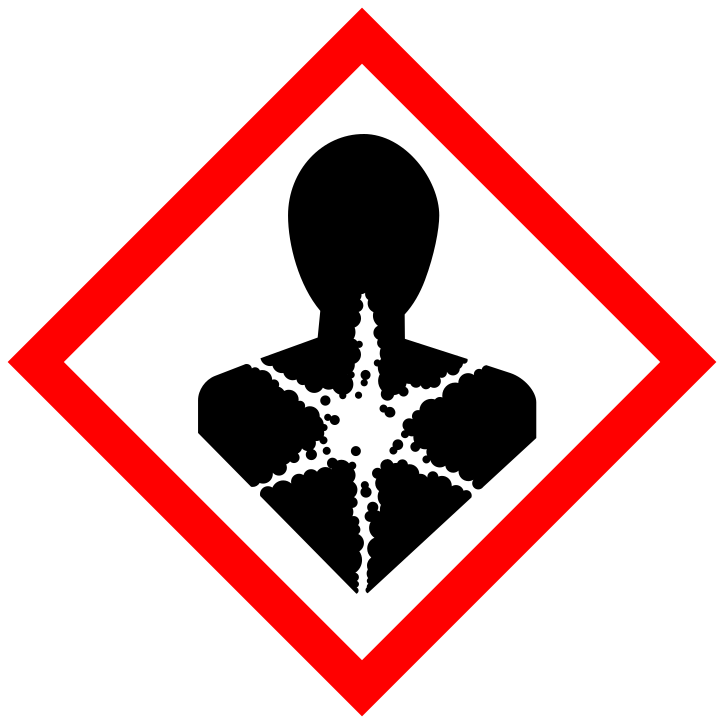
Health hazard
Carcinogens, mutagens, reproductive toxicity, respiratory sensitizers, target organ toxicity, aspiration hazard.
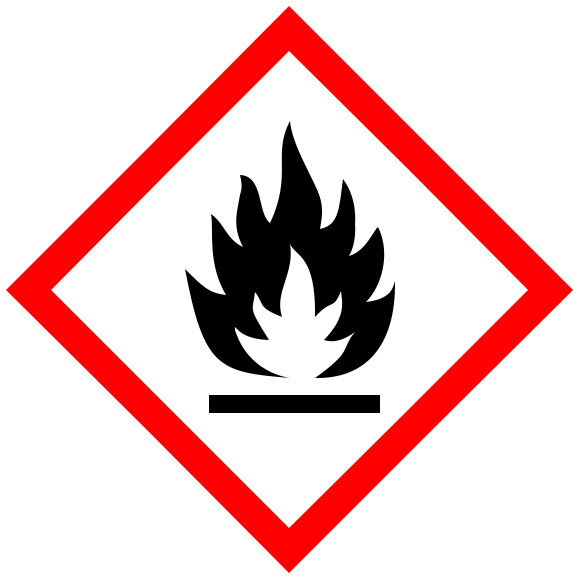
Flame
Flammables, pyrophorics, self-heating, emits flammable gas, self-reactives, organic peroxides.
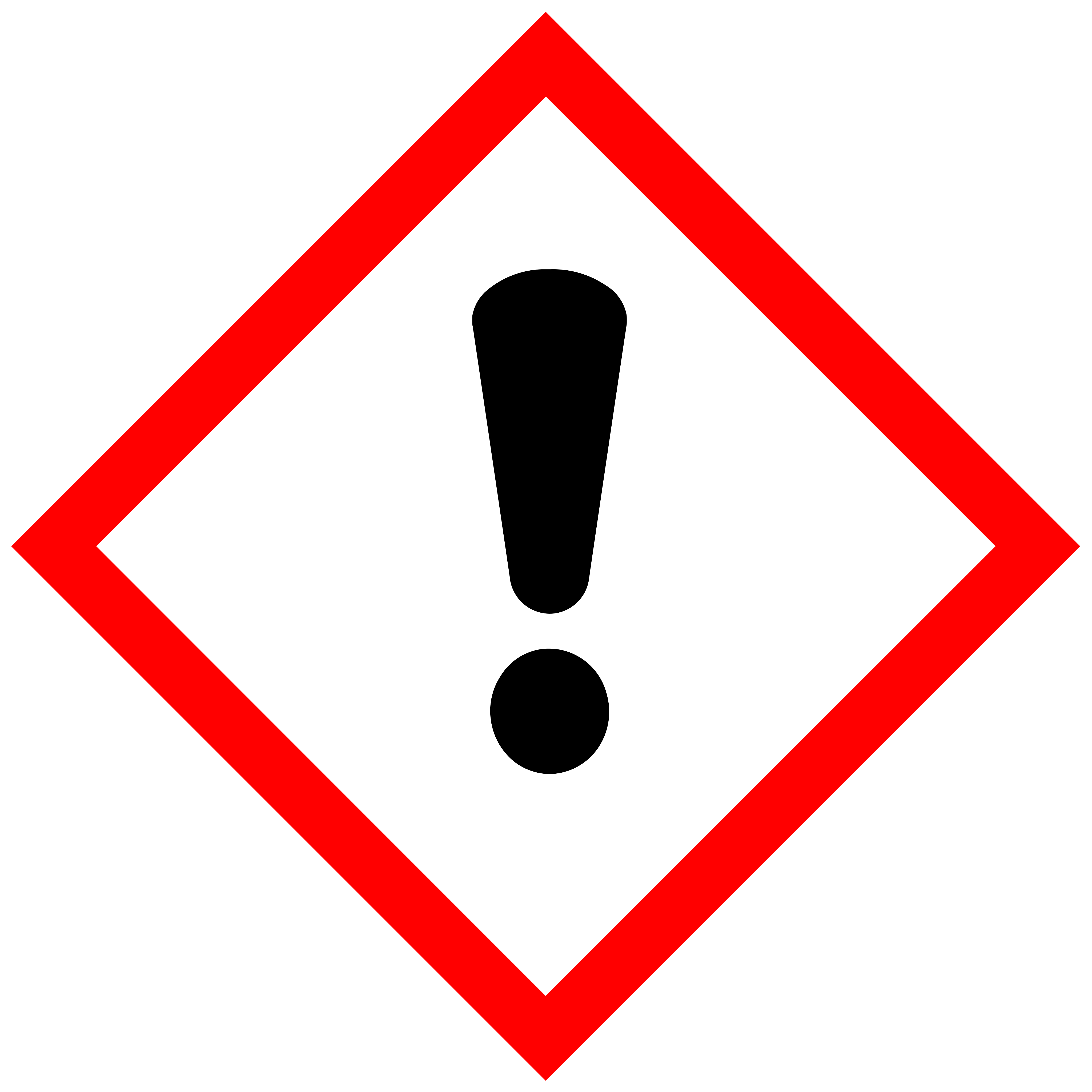
Exclamation mark
Irritant (skin and eye), skin sensitizer, acute toxicity (harmful), narcotic effects, respiratory tract irritant.
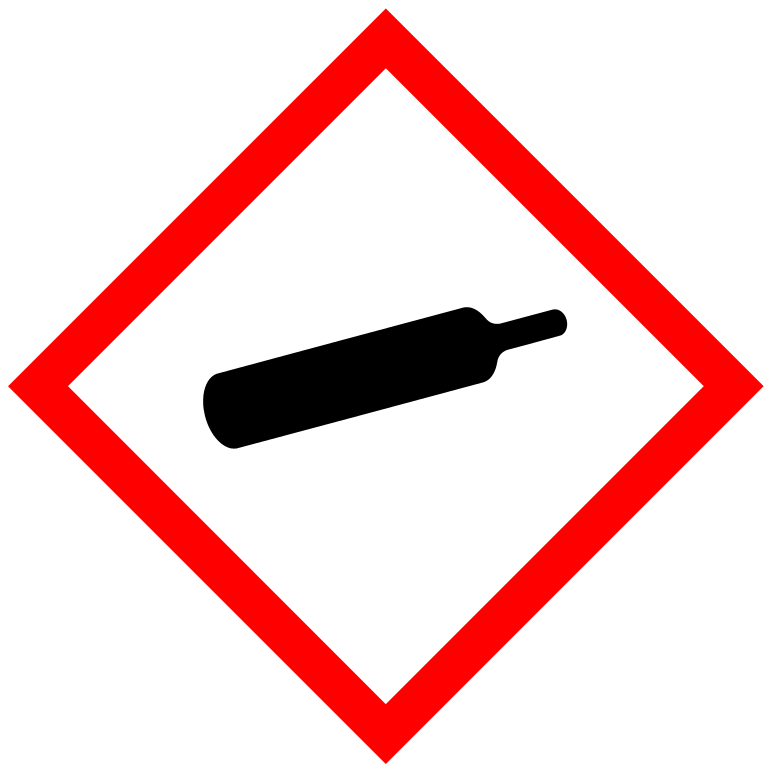
Gas cylinder
Gases under pressure. The container may explode if heated.
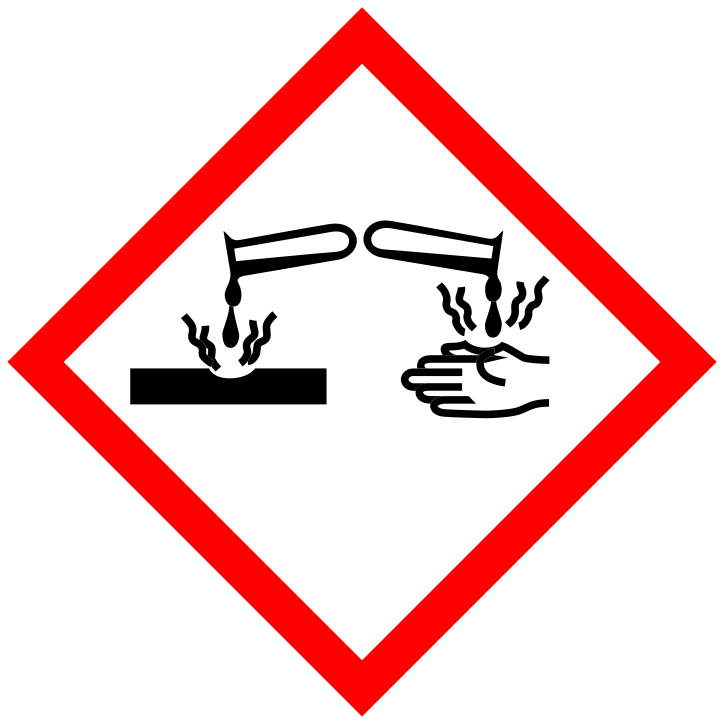
Corrosion
Skin corrosion and burns, serious eye damage, corrosive to metals.
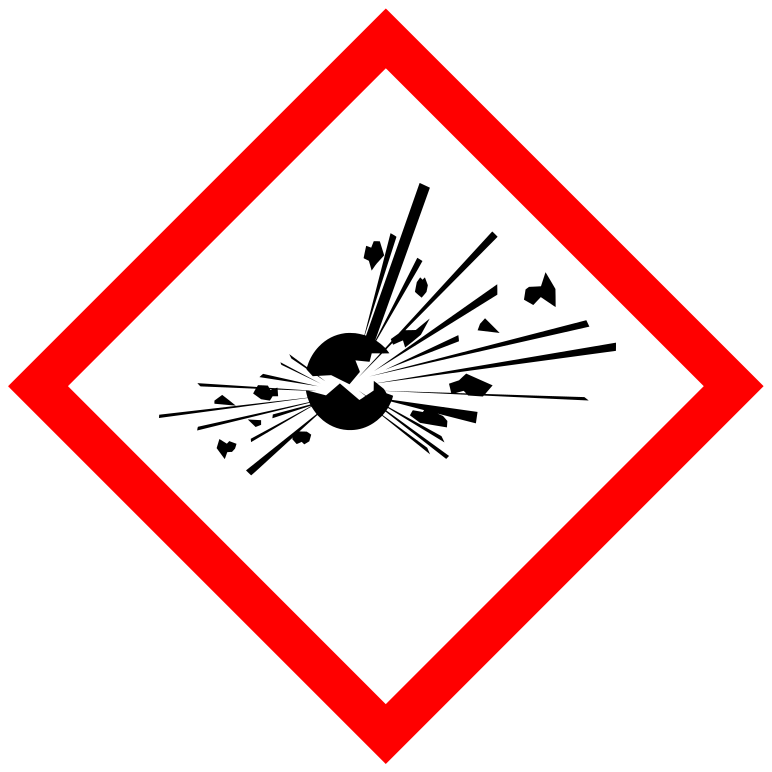
Exploding bomb
Explosives, self-reactives, organic peroxides.
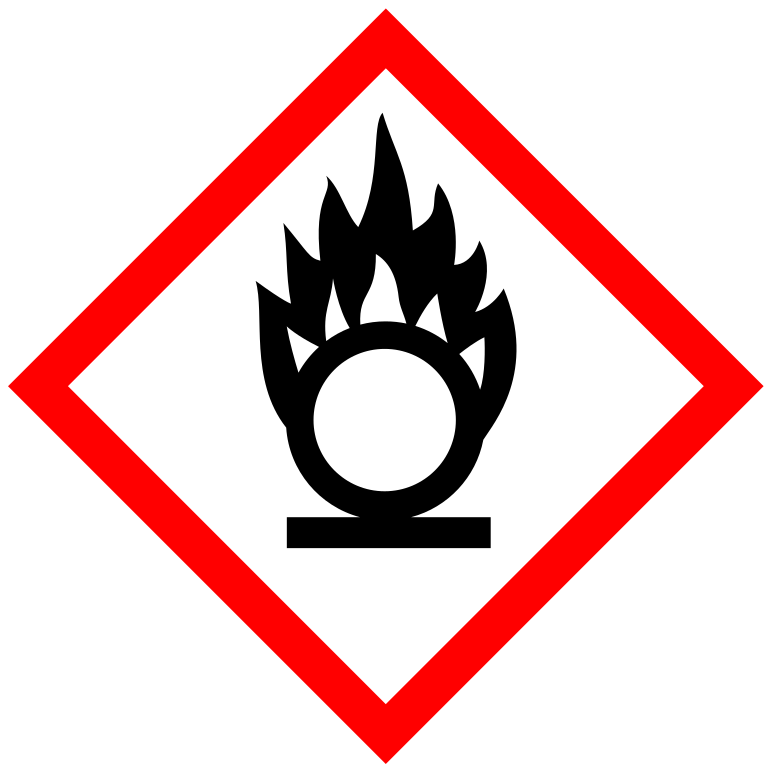
Flame over circle
Oxidizers, which can cause or intensify a fire.
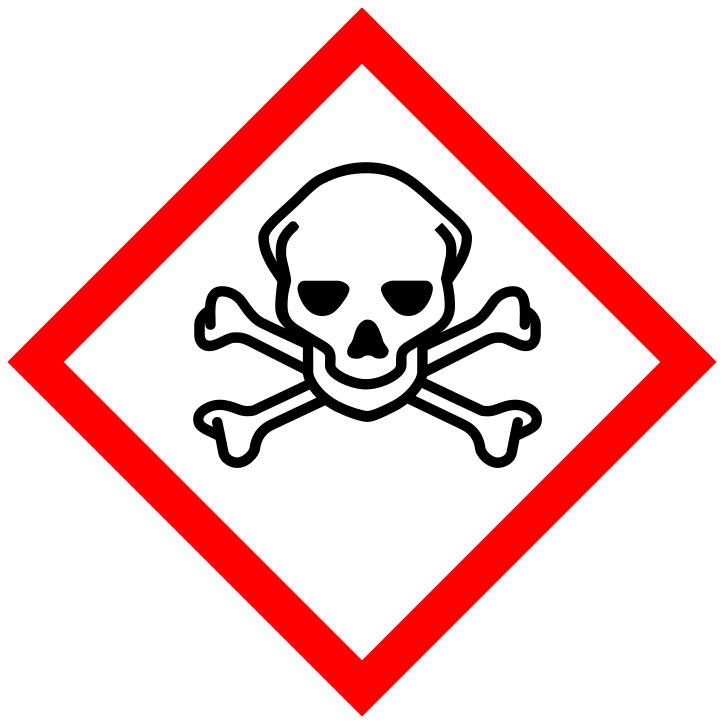
Skull and crossbones
Acute toxicity (fatal or toxic) even in small amounts.
Environment
Aquatic toxicity. Optional under OSHA HazCom; often seen on products shipped internationally.
How to read a HazCom label
Labels on shipped containers must include six elements:
- Product identifier: the name or number that matches the SDS.
- Signal word: “Danger” for the more severe hazards or “Warning” for less severe ones. Only one is used.
- Hazard statements: standard phrases such as “Causes serious eye damage.”
- Pictograms for each hazard class that requires one.
- Precautionary statements: how to prevent exposure, respond, store and dispose of the product.
- Name, address and phone number of the manufacturer, importer or other responsible party.
Inside the workplace, employers can use the full shipped label or an alternative workplace label that gives the product identifier and general hazard information, as long as workers are trained to understand it. A small portable container filled for one worker’s immediate use during their shift does not need a label.
Get your HazCom certificate today
100% online · unlimited free retakes · instant certificate + printable digital wallet card
The 16 sections of a Safety Data Sheet
Every SDS uses the same 16 sections in the same order, so you always know where to look:
1. Identification
9. Physical and chemical properties
2. Hazard(s) identification
10. Stability and reactivity
3. Composition / information on ingredients
11. Toxicological information
4. First-aid measures
12. Ecological information*
5. Fire-fighting measures
13. Disposal considerations*
6. Accidental release measures
14. Transport information*
7. Handling and storage
15. Regulatory information*
8. Exposure controls / personal protection
16. Other information, including date of preparation or last revision
*Sections 12 to 15 must be included, but OSHA does not enforce their content because other agencies regulate those topics. In an emergency, go first to Section 2 (hazards), Section 4 (first aid), Section 6 (spills) and Section 8 (PPE).
What changed in the 2024 HazCom update
OSHA published an updated HazCom standard in May 2024, aligning it with GHS Revision 7. Key changes include new rules for labeling very small containers, clarified labeling rules for containers that have been released for shipment, new hazard classes and categories (such as for aerosols, desensitized explosives and flammable gases), and updated SDS content. Manufacturers and distributors have phased compliance dates running into 2027, and employers must update their workplace labels, written program and training within six months of each date where needed.
Who needs HazCom training and what it covers
Any worker who may be exposed to hazardous chemicals under normal working conditions or in a foreseeable emergency needs HazCom training. That includes many jobs in:
Training must cover the requirements of the standard, where hazardous chemicals are present in the work area, the location of the written program and SDSs, how to detect a release, the physical and health hazards of the chemicals, protective measures and PPE, and how to read labels and SDSs.
OSHA does not approve, certify or accredit online training providers. An online HazCom course covers the general knowledge. Your employer must still train you on the specific chemicals, SDS locations and procedures at your site. With Gama Safety you pass the exam with 80% or better (unlimited free retakes) and download your certificate and printable wallet card right away.
Frequently asked questions
How many GHS pictograms are there?
There are 9 GHS pictograms. OSHA HazCom requires 8 of them on labels; the environment (aquatic toxicity) pictogram is optional under OSHA.
What are the 6 elements of a HazCom label?
Product identifier, signal word, hazard statements, pictograms, precautionary statements, and the name, address and phone number of the responsible party.
How often is HazCom training required?
OSHA requires HazCom training at the time of initial assignment and whenever a new chemical hazard is introduced into the work area. There is no fixed annual requirement, but many employers refresh it every year.
What is the difference between HazCom and GHS?
GHS is the United Nations system for classifying and communicating chemical hazards. HazCom is the OSHA rule that adopts GHS for US workplaces, adding US requirements such as the written program and worker training.
Where must Safety Data Sheets be kept?
Employers must keep an SDS for each hazardous chemical and make it readily accessible to workers in their work area during every shift. Electronic access is allowed if there are no barriers to getting the information immediately.
Related